

How to Encourage Repeat Purchases
Estimated reading time: 8 minutes
Key Takeaways
- A well-designed benefits of a loyalty program strategy boosts revenue, retention, and engagement.
- Personalization and data insights power more effective marketing.
- Gamification and mobile-first experiences keep customers coming back.
- Lower acquisition costs and higher Customer Lifetime Value (CLV) create a strong business case.
Table of Contents
- Introduction
- Understanding Loyalty Programs and Their Core Advantages
- Evaluating the Core Benefits of a Loyalty Program
- FAQ
Introduction
Customer loyalty programs have become essential tools for businesses seeking sustainable growth in today’s competitive marketplace. The benefits of a loyalty program extend far beyond simple point accumulation, creating meaningful connections between brands and their customers while driving measurable business results.
Understanding the advantages of loyalty programs is crucial for any business leader considering this strategic investment. These programs serve as powerful customer retention strategies that reward repeat customers through points, discounts, special offers, and exclusive experiences.
The modern business landscape has shifted dramatically toward customer retention rather than pure acquisition. Organizations now recognize that sustaining long-term relationships delivers greater value than constantly chasing new customers. This fundamental change makes why have a loyalty program a critical question for business success.
Recent studies confirm that customer retention strategies are more cost-effective than acquiring new customers. Loyalty programs represent one of the most effective methods for achieving this goal while building brand advocacy and increasing revenue.
“It costs five times more to attract a new customer than to keep an existing one.” — Propello Cloud Business Case
Understanding Loyalty Programs and Their Core Advantages
A loyalty program is a structured business strategy designed to reward repeat customers for their continued engagement and purchases. These programs create tangible value through various reward mechanisms including points systems, discounts, special offers, and exclusive experiences that make customers feel valued and appreciated.
The primary function of loyalty programs centers on driving customer engagement and retention through systematic reward distribution. When customers receive recognition for their purchases and interactions, they develop stronger emotional connections to the brand.
Key Advantages of Loyalty Programs
- Improved Customer Acquisition — Differentiates brands with unique incentives, attracting new customers in crowded markets.
- Enhanced Customer Retention — Selling to existing customers is 60-70% easier than acquiring new ones.
- Boosted Customer Engagement — Modern programs leverage personalized experiences and gamification elements to deepen interactions.
The strategic implementation of loyalty programs transforms one-time buyers into repeat customers while building communities around brands. This transformation occurs through consistent positive reinforcement that rewards desired customer behaviors.
Further reading: Fielo eBook on the Business Case | Antavo Case Study
Evaluating the Core Benefits of a Loyalty Program
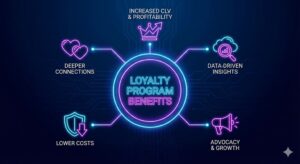
Increased Customer Lifetime Value
One of the most significant benefits of a loyalty program is the dramatic increase in Customer Lifetime Value (CLV). Loyalty programs encourage customers to make purchases more frequently while increasing their average order values.
When customers participate in reward programs, they tend to consolidate their purchases with participating brands rather than spreading spending across multiple competitors. This consolidation behavior directly translates into higher revenue per customer over time.
Enhanced Customer Data Collection
Loyalty programs serve as powerful data collection mechanisms that provide insights into customer preferences and behaviors. Every interaction within the program generates valuable loyalty program data about purchasing patterns, product preferences, and engagement levels.
This data enables businesses to create more targeted marketing campaigns and develop products that better meet customer needs. The personalization opportunities created through data collection lead to improved customer experiences and higher conversion rates.
Higher Advocacy and Referrals
Satisfied loyalty program members become brand advocates who actively recommend products and services to their networks, delivering highly qualified prospects through word-of-mouth marketing.
These referred customers often exhibit higher lifetime values than traditionally acquired customers, amplifying the program’s overall ROI.
Reduced Marketing and Acquisition Costs
Retaining existing customers through loyalty initiatives costs significantly less than acquiring new customers via traditional channels. Savings can then be reinvested into program enhancements, further strengthening customer relationships.
FAQ
Q: How long does it take to see ROI from a loyalty program?
A: Businesses often begin to see measurable improvements in retention and revenue within 6–12 months, depending on program scale and customer base.
Q: Do loyalty programs work for small businesses?
A: Absolutely. Smaller brands benefit from deeper customer relationships and can implement cost-effective digital solutions to reward loyalty.
Q: What rewards resonate most with customers?
A: Personalized rewards—such as tailored discounts, early access, or experiential perks—outperform generic offers by making customers feel truly valued.
Q: Is a points system the only option?
A: No. Tiered memberships, paid VIP clubs, and experience-based models can all be effective, especially when combined with gamification elements.
Latest posts


Estimated reading time: 8 minutes Key Takeaways Loyalty programs can increase Customer Lifetime…
Read more
Estimated Reading Time 8 minutes Key Takeaways Loyalty programs dramatically enhance customer retention…
Read more
Estimated reading time: 9 minutes Key Takeaways Loyalty programs cultivate deeper customer relationships…
Read more
FOLLOW US


