

Comprehensive Loyalty Program Plan
Estimated reading time: 9 minutes
Key Takeaways
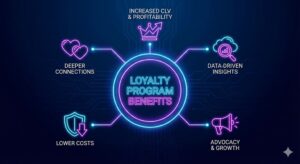
- Loyalty programs cultivate deeper customer relationships that drive recurring revenue.
- They boost Customer Lifetime Value (CLV) by encouraging frequent, higher-value purchases.
- Rich first-party data from loyalty platforms powers hyper-personalized marketing.
- Advocacy and referrals from loyal customers lower acquisition costs dramatically.
- When executed well, loyalty programs deliver sustainable competitive advantage.
Table of Contents
- Introduction
- Understanding Loyalty Programs and Their Core Advantages
- Evaluating the Core Benefits of a Loyalty Program
- FAQ
Introduction
Customer loyalty programs have become essential tools for businesses seeking sustainable growth in today’s competitive marketplace. The benefits of a loyalty program extend far beyond simple point accumulation.
Understanding the advantages of loyalty programs is crucial for any business leader considering this strategic investment.
The modern business landscape has shifted dramatically toward customer retention rather than pure acquisition. Organizations now recognize that sustaining long-term relationships delivers greater value than constantly chasing new customers. This fundamental change in approach makes why have a loyalty program a critical question for business success.
Customer retention strategies have gained importance as companies discover the cost-effectiveness of keeping existing customers happy versus acquiring new ones. Loyalty programs represent one of the most effective methods for achieving this goal while building brand advocacy and increasing revenue.
This business-case analysis underscores the transformative potential of an effective loyalty initiative.
Understanding Loyalty Programs and Their Core Advantages
A loyalty program is a structured strategy designed to reward repeat customers for their continued engagement and purchases. These programs create tangible value through points, discounts, and exclusive experiences that make customers feel valued.
The primary function of loyalty programs is to drive customer engagement and retention through systematic reward distribution. When customers receive recognition for their purchases and interactions, they develop stronger emotional connections to the brand.
Key Advantages of Loyalty Programs
Improved Customer Acquisition
Loyalty programs help differentiate brands from competitors by offering unique incentives that attract new customers. Evidence from e-commerce programs shows that compelling rewards can tip the balance in crowded markets.
Enhanced Customer Retention
Selling to existing customers is 60-70% easier than acquiring new ones. Loyalty programs keep those existing customers engaged and buying more often.
Boosted Customer Engagement
Modern loyalty programs leverage personalization and gamification to enrich interactions. Gamified leaderboards turn everyday shopping into an engaging experience that fosters community.
The strategic implementation of loyalty initiatives transforms one-time buyers into brand advocates, creating communities anchored in shared value and consistent reward.
Supporting resources include in-depth business cases, white-papers, and case studies that validate these outcomes.
Evaluating the Core Benefits of a Loyalty Program
Increased Customer Lifetime Value
One of the most significant benefits of a loyalty program is the dramatic increase in CLV. Members purchase more frequently and spend more per visit, consolidating their shopping with the brands that reward them.
Each transaction reinforces positive associations, creating a virtuous cycle of loyalty and revenue growth.
Enhanced Customer Data Collection
Every interaction inside a loyalty platform generates valuable first-party data. This intelligence fuels targeted campaigns, predictive analytics, and product development aligned with customer needs.
Armed with data insights, businesses can anticipate churn and intervene proactively, safeguarding retention rates.
Higher Advocacy and Referrals
Satisfied members become vocal evangelists. By rewarding social engagement, brands amplify organic reach and tap into low-cost acquisition channels.
Referral customers typically arrive highly qualified and display above-average loyalty themselves, creating a compounding growth effect.
Reduced Marketing and Acquisition Costs
Keeping customers happy costs far less than courting new ones. Loyalty initiatives shift spend from expensive outbound tactics to nurturing existing relationships, freeing budget for strategic innovations.
FAQ
Q1: What industries benefit most from loyalty programs?
A: Retail, hospitality, e-commerce, and subscription services see immediate gains, but any customer-centric sector can leverage loyalty for growth.
Q2: How long does it take to see ROI?
A: Many businesses notice uplift within six months, though full ROI typically materializes after 12–18 months of consistent program optimization.
Q3: Do small businesses need loyalty software?
A: Not always. Punch-card or email-based systems can work initially, but scalable software becomes crucial as the customer base grows.
Q4: What rewards resonate most with customers?
A: Experiential perks—exclusive events, early product access, and personalized offers—tend to outperform generic discounts in driving emotional loyalty.
*A well-crafted loyalty program delivers measurable returns, richer customer insights, and a brand community that fuels sustained success.*
Latest posts


Estimated reading time: 8 minutes Key Takeaways Loyalty programs can increase Customer Lifetime…
Read more
Estimated Reading Time 8 minutes Key Takeaways Loyalty programs dramatically enhance customer retention…
Read more
Estimated reading time: 9 minutes Key Takeaways Loyalty programs cultivate deeper customer relationships…
Read more
FOLLOW US


