

How to Increase Average Order Value Through a Loyalty Program
Estimated reading time: 8 minutes
Key Takeaways
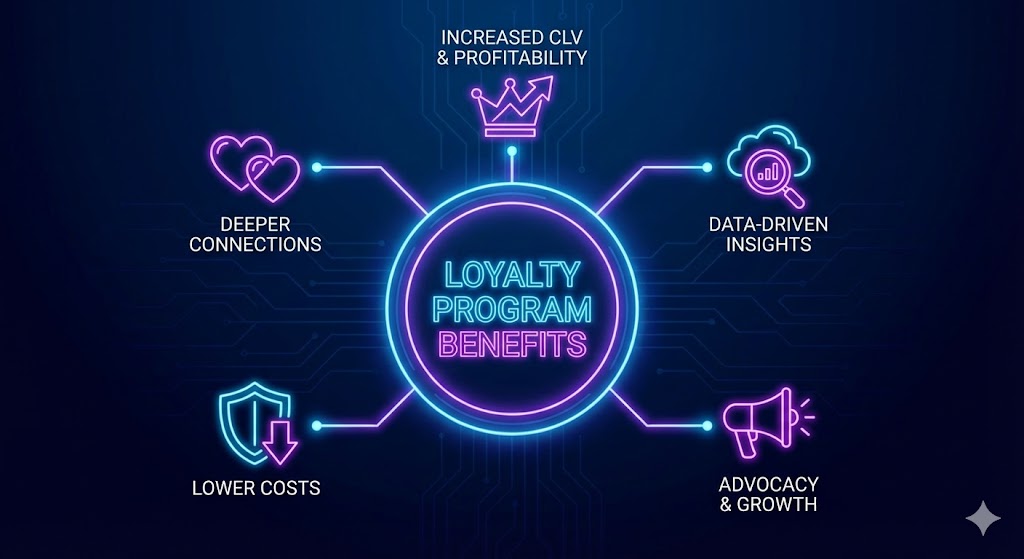
- Loyalty programs foster deeper emotional connections and higher purchase frequency.
- Data captured through programs fuels more effective, personalized marketing.
- Repeat customers are significantly cheaper to serve than newly acquired ones.
- Advocacy from loyal members drives organic, cost-effective growth.
- Strategic implementation elevates Customer Lifetime Value (CLV) and profitability.
Table of Contents
- Introduction
- Understanding Loyalty Programs & Core Advantages
- Evaluating the Core Benefits
- FAQ
- Back to Top
Introduction
Customer loyalty programs have become essential tools for businesses seeking sustainable growth in today’s competitive marketplace. The benefits of a loyalty program extend far beyond simple point accumulation, creating meaningful connections between brands and their customers while driving measurable results.
Understanding the advantages of loyalty programs is crucial for any leader considering this investment. These initiatives serve as powerful customer retention strategies that reward repeat buyers through points, discounts, and exclusive experiences.
The modern landscape has shifted toward retention rather than pure acquisition. Organizations now recognize that sustaining long-term relationships delivers greater value than constantly chasing new customers—making why have a loyalty program a critical question for success.
Understanding Loyalty Programs & Their Core Advantages
A loyalty program is a structured business strategy designed to reward repeat customers for their continued engagement. Through points systems, discounts, and exclusive experiences, programs make customers feel valued while boosting retention.
Key Advantages
- Improved Customer Acquisition: Unique incentives attract new shoppers in crowded markets.
- Enhanced Retention: Selling to existing customers is 60–70% easier than acquiring new ones.
- Boosted Engagement: Modern programs leverage gamification such as a gamification leaderboard or a customer quest system to keep members active.
Through consistent positive reinforcement, brands transform one-time buyers into repeat customers and build vibrant communities. Evidence from resources such as loyalty program case studies underscores the effectiveness of this approach.
Evaluating the Core Benefits of a Loyalty Program
1. Increased Customer Lifetime Value (CLV)
One of the most significant benefits of a loyalty program is the dramatic lift in CLV. Members purchase more frequently and spend more per visit, consolidating their buying with brands that reward them.
“Every reward earned reinforces the customer–brand bond, driving repeat purchases and higher revenue per customer.”
2. Enhanced Customer Data Collection
Programs double as powerful data engines. Each swipe, click, or redemption yields insights into preferences and behaviors (source). This information fuels precise segmentation, smarter product development, and proactive issue resolution.
3. Higher Advocacy & Referrals
Satisfied members become vocal advocates. According to research on how loyalty programs encourage repeat purchases, referral customers often exhibit even higher lifetime value. Word-of-mouth promotion lowers acquisition costs while delivering warm leads.
4. Reduced Marketing & Acquisition Costs
It is far less expensive to keep a customer than to acquire one. Loyalty initiatives shift budget from constant outreach to nurturing, freeing resources for innovation and strategic growth.
FAQ
How do I decide which rewards to offer?
Analyze customer purchase patterns and survey members to identify incentives that genuinely motivate repeat behavior.
What metrics should I track to measure program success?
Key metrics include enrollment rate, active participation, CLV lift, redemption rate, and referral volume.
Are loyalty programs only for large enterprises?
No. Small and mid-sized businesses can start simple—such as punch cards or digital points systems—and scale as they grow.
Latest posts


Estimated reading time: 8 minutes Key Takeaways Loyalty programs can increase Customer Lifetime…
Read more
Estimated Reading Time 8 minutes Key Takeaways Loyalty programs dramatically enhance customer retention…
Read more
Estimated reading time: 9 minutes Key Takeaways Loyalty programs cultivate deeper customer relationships…
Read more
FOLLOW US


