


What Is a Loyalty Program? A Complete Guide to Customer Retention and Brand Growth
Estimated reading time: 10 minutes
Key Takeaways
- A loyalty program rewards repeat customers, driving *sustained* engagement and higher customer lifetime value.
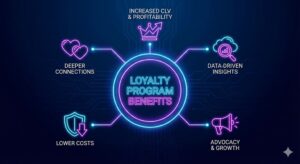
- Businesses benefit from richer data, brand affinity, and cost-efficient retention compared with new customer acquisition.
- Customers enjoy exclusive perks, personalized offers, and recognition, forging an emotional bond with the brand.
- Advanced elements—tiers, gamification, and tokenized cashback—elevate a standard program into a growth engine.
- Implementation is straightforward when paired with seamless e-commerce integration and clear reward structures.
Table of Contents
- Understanding Loyalty Program Definition
- Business Objectives
- Customer Benefits
- How Do Loyalty Programs Work?
- Advanced Features
- FAQ
Understanding Loyalty Program Definition
A loyalty program is a structured marketing system that grants points, discounts, or exclusive experiences to customers who make repeat purchases. For a deeper dive into the foundations of successful programs, explore The 6 Pillars of a High-ROI E-commerce Loyalty Program.
Business Objectives
- Increase customer retention and reduce churn.
- Build brand affinity by nurturing emotional connections.
- Gather actionable data to refine marketing strategies.
- Maximize customer lifetime value through upsells and cross-sells.
One standout tactic is a cashback & tokenization system that turns rewards into tradable assets—*blurring the line between loyalty points and real-world value*.
Customer Benefits
- Exclusive discounts and members-only deals.
- Personalized rewards aligned with shopping habits.
- Early access to product launches or flash sales.
- Status recognition through tier badges and perks.
According to Annex Cloud’s loyalty research, 83 % of shoppers say rewards make them more likely to continue purchasing from a brand.
How Do Loyalty Programs Work?
Four fundamental steps power nearly every loyalty initiative:
- Customer Enrollment – A frictionless sign-up form (often bolstered by seamless e-commerce integration) captures essential contact data.
- Earning Rewards – Shoppers collect points per dollar spent, for leaving reviews, or referring friends.
- Point Accumulation – Progress builds anticipation; dashboards and emails keep customers informed.
- Redemption – Points convert to coupons, freebies, gated content, or VIP experiences.
“The simplicity of earning and the excitement of redeeming are the twin engines of any successful rewards system.” — Zendesk Loyalty Insights
Advanced Features That Supercharge Loyalty
Tier-Based Benefits
Integrating an experience system unlocks silver, gold, and platinum tiers, incentivizing customers to “level up” for premium perks like priority support or early product drops.
Gamification Elements
- Quest-style tasks via a customer quest system (e.g., “buy a new release + post on Instagram”).
- Collectible badges and digital trophies that celebrate milestones.
- Leaderboard competitions to spark friendly rivalry.
These enhancements turn routine shopping into an *interactive adventure*, amplifying frequency and average order value.
FAQ
Q1: Do loyalty programs work for small businesses?
A1: Absolutely. In fact, this small-business strategy guide shows loyalty initiatives can lift revenue by up to 30 % when implemented with clear rewards and simple sign-up flows.
Q2: How quickly can I launch a program?
A2: With plug-and-play e-commerce integrations, many merchants go live within two weeks, collecting data and rewarding customers instantly.
Q3: What budget should I allocate to rewards?
A3: Most brands earmark 1-5 % of revenue for rewards. The key is balancing attractive incentives with sustainable margins.
Q4: Can loyalty points expire?
A4: Yes. Setting an expiration date drives urgency, but be sure to remind members via email or SMS so the policy feels helpful, not punitive.
Q5: How do I measure program success?
A5: Track metrics like repeat purchase rate, average order value, redemption rate, and overall customer lifetime value over time.
Latest posts


Estimated reading time: 8 minutes Key Takeaways Loyalty programs can increase Customer Lifetime…
Read more
Estimated Reading Time 8 minutes Key Takeaways Loyalty programs dramatically enhance customer retention…
Read more
Estimated reading time: 9 minutes Key Takeaways Loyalty programs cultivate deeper customer relationships…
Read more
FOLLOW US


