

How to Create a Loyalty Program?
The Complete Guide to the Benefits of a Loyalty Program for Your Business
Estimated reading time: 8 minutes
Key Takeaways
- Implementing a benefits of a loyalty program framework can increase repeat purchase rates by up to 35%.
- Loyal members spend *20% more per transaction* than non-members.
- Quality data from loyalty initiatives fuels hyper-personalised marketing.
- Word-of-mouth advocacy lowers overall acquisition costs.
- A well-structured program becomes a key differentiator in saturated markets.
Table of Contents
- Introduction
- Understanding Loyalty Programs & Core Advantages
- Evaluating the Core Benefits
- Conclusion
- FAQ
Introduction
Customer loyalty programs have become essential tools for businesses seeking sustainable growth in today’s competitive marketplace. The benefits of a loyalty program extend far beyond simple point accumulation, creating meaningful connections between brands and their customers while driving measurable business results.
Understanding the advantages of loyalty programs is crucial for any business leader considering this strategic investment. These programs serve as powerful customer retention strategies that reward repeat customers through points, discounts, special offers, and exclusive experiences.
The modern business landscape has shifted dramatically toward customer retention rather than pure acquisition. Organizations now recognize that sustaining long-term relationships delivers greater value than constantly chasing new customers. This fundamental change in approach makes why have a loyalty program a critical question for business success.
Customer retention strategies have gained importance as companies discover the cost-effectiveness of keeping existing customers happy versus acquiring new ones. Loyalty programs represent one of the most effective methods for achieving this goal while building brand advocacy and increasing revenue.
Understanding Loyalty Programs and Their Core Advantages
A loyalty program is a structured business strategy designed to reward repeat customers for their continued engagement and purchases. These programs create tangible value through various reward mechanisms including points systems, discounts, special offers, and exclusive experiences that make customers feel valued and appreciated. What is a loyalty program?
The primary function of loyalty programs centers on driving customer engagement and retention through systematic reward distribution. When customers receive recognition for their purchases and interactions, they develop stronger emotional connections to the brand.
Key Advantages of Loyalty Programs
Improved Customer Acquisition
Loyalty programs help differentiate brands from competitors by offering unique incentives that attract new customers. These programs create compelling reasons for potential customers to choose one brand over another in crowded marketplaces.
High-ROI e-commerce loyalty program
Enhanced Customer Retention
Research demonstrates that selling to existing customers is 60-70% easier than acquiring new ones. This statistic highlights why customer retention through loyalty programs represents such a valuable business strategy.
Boosted Customer Engagement
Modern loyalty programs leverage personalised experiences, gamification elements, and mobile-first approaches to increase both the frequency and quality of customer interactions.
Customer quest system approaches create multiple opportunities for brands to connect with their audience.
The strategic implementation of loyalty programs transforms one-time buyers into repeat customers while building communities around brands. This transformation occurs through consistent positive reinforcement that rewards desired customer behaviours.
Further evidence and research can be found in this business case for a customer loyalty program as well as this illuminating loyalty program case study.
Evaluating the Core Benefits of a Loyalty Program
Increased Customer Lifetime Value
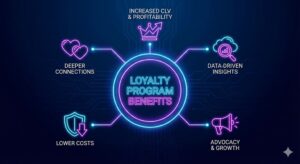
One of the most significant benefits of a loyalty program is the dramatic increase in Customer Lifetime Value (CLV). Long-term engagement with an experience system encourages customers to make purchases more frequently while increasing their average order values.
When customers participate in reward programs, they tend to consolidate their purchases with participating brands rather than spreading spending across multiple competitors. This consolidation behaviour directly translates into higher revenue per customer over time.
“The psychological impact of earning rewards creates positive purchase associations that encourage customers to return repeatedly.”
Enhanced Customer Data Collection
Loyalty programs serve as powerful data collection mechanisms that provide insights into customer preferences and behaviours. Every interaction within the program generates valuable information about purchasing patterns, product preferences, and engagement levels.
This data enables businesses to create more targeted marketing campaigns and develop products that better meet customer needs. The personalisation opportunities created through data collection lead to improved customer experiences and higher conversion rates.
Higher Advocacy and Referrals
Satisfied loyalty program members become brand advocates who actively recommend products and services to their networks. This word-of-mouth marketing represents one of the most cost-effective customer acquisition methods available.
Rewarding social media engagement magnifies this effect.
The referral behaviour of loyal customers creates organic growth that requires minimal marketing investment while delivering highly qualified prospects. These referred customers often exhibit higher lifetime values than traditionally acquired customers.
Reduced Marketing and Acquisition Costs
Retaining existing customers through loyalty programs costs significantly less than acquiring new customers through traditional marketing channels. This cost efficiency allows businesses to allocate marketing budgets more effectively.
*Simply put, every dollar saved on acquisition can be re-invested in enhancing member experiences, fuelling a virtuous growth cycle.*
Conclusion
From elevating CLV to fostering community-driven advocacy, loyalty initiatives deliver quantifiable value across the customer journey. The data-rich nature of these programs empowers businesses to iterate quickly, personalise deftly, and out-compete rivals willing to rely solely on price.
The time to build or optimise your loyalty program is now. Harness the insights, frameworks, and case studies referenced above to craft a strategy that delights customers and drives sustained profitability.
FAQ
Q1: How much does it cost to launch a loyalty program?
A: Costs vary widely based on technology stack, reward structure, and scale, but cloud-based solutions can start from as little as a few hundred dollars per month.
Q2: What are the most popular reward types?
A: Points-for-purchase is classic, yet cashback, tiered perks, and experiential rewards are rapidly gaining traction among modern consumers.
Q3: How quickly can I expect ROI?
A: Many businesses see measurable lift within the first 6-12 months, especially when programs are heavily promoted at checkout and across digital channels.
Q4: Can small businesses benefit from loyalty programs?
A: Absolutely. Even a simple punch-card or app-based stamp system can meaningfully boost repeat visits and gather valuable customer data.
Latest posts


Estimated reading time: 8 minutes Key Takeaways Loyalty programs can increase Customer Lifetime…
Read more
Estimated Reading Time 8 minutes Key Takeaways Loyalty programs dramatically enhance customer retention…
Read more
Estimated reading time: 9 minutes Key Takeaways Loyalty programs cultivate deeper customer relationships…
Read more
FOLLOW US


